\!DOCTYPE html>
Irrigation Managers has programmed and managed Maxicom systems across commercial, municipal, and institutional landscapes — from single-site CCU installations to multi-site deployments managing hundreds of ESP-SAT satellites. Thousands of sites across the country are still running Maxicom. Most of them are not running it well.
✓ Maxicom 1.X · 2.X · 3.X · Maxicom2 · v4.5 · CCU · ESP-SAT · ✓ IQ4 transition planning
A system capable of managing hundreds of sites, dozens of weather sources, and thousands of stations requires deliberate setup at every level. Most Maxicom installations were set up once and never revisited.
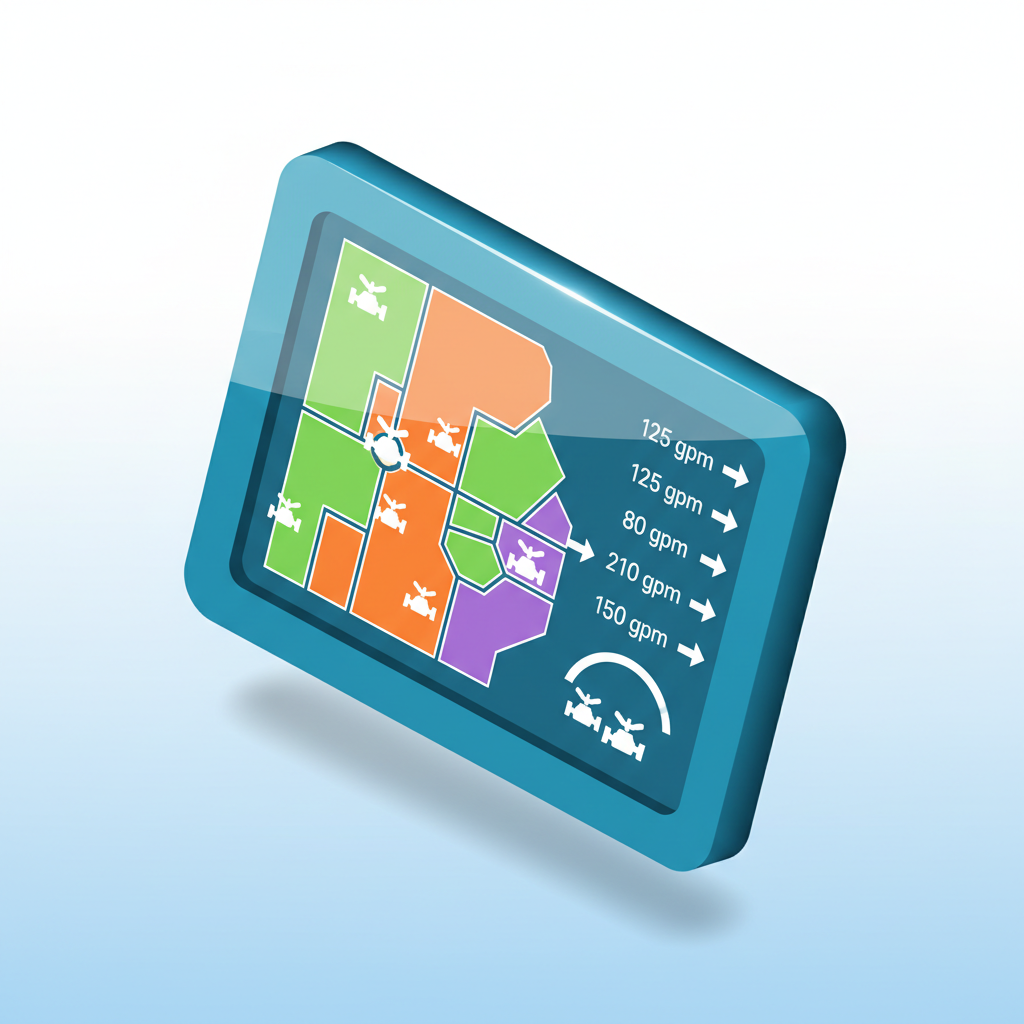
How sites, CCUs, and satellites are organized determines whether your team can manage areas independently, pause schedules for events, and isolate problems quickly. With up to 999 schedules per CCU available, poor structure is never necessary — but it's extremely common.

ET Checkbook adjusts station runtimes based on daily evapotranspiration values — but only if precipitation rates, historical ET values, and soil infiltration factors reflect real site conditions. Generic defaults squander the feature's value entirely.

Flo-Watch identifies breaks, initiates automatic valve or mainline shutdown, and sends alarm messages with location and action taken. But accurate flow limits must be configured for each mainline and zone. Most Maxicom systems have Flo-Watch enabled but not properly calibrated. We do both.

Maxicom supports telephone, cellular, radio, Ethernet, fiber optics, and direct connect — often mixed across a portfolio. Getting paths set up, tested, and documented ensures schedules reach field devices on time and alarms flow back reliably.

On sites with slopes, heavy soils, or drainage challenges, Cycle+Soak is critical. But soak times configured incorrectly consume your entire water window. Properly set up, the system uses soak delays productively — running other stations while zones recover.

Rain Bird's long-term platform is IQ4. We assess your Maxicom setup honestly, optimize it for full potential in the near term, and help plan a transition on the right timeline — not one driven by a contractor's sales interest.

Most irrigation management stops after initial programming. We don't.
Before we program anything, we establish your site's actual water need and set a measurable goal — the foundation for knowing whether the platform is delivering what it's capable of.
We organize CCUs, satellites, and schedules to match your site's layout and use patterns — then enter accurate station data, configure ET Checkbook with site-specific reference values, and set up Cycle+Soak to protect your water window.
We program over- and under-flow limits matched to your actual site profiles, configure alarm routing, and test the full alert chain. We configure and test your communication paths — cellular, radio, Ethernet, or mixed — and document the full architecture.
We watch your system continuously. When Flo-Watch fires or communication failures occur, we interpret and respond. We also provide an honest assessment of whether a Maxicom-to-IQ4 transition makes sense for your organization and help plan it on the right timeline.
v1.X, 2.X, 3.X, Maxicom2, and v4.5 — active support including Global Service Plan (GSP) coordination.
Site-specific calibration of evapotranspiration adjustments per satellite and schedule.
Per-mainline flow limit calibration, low-flow alarms, and automatic shutdown configuration and testing.
Water-window-aware soak configuration to prevent runoff on slopes and heavy soils without consuming the irrigation window.
Cellular, radio, Ethernet, telephone, and mixed communication setup, testing, and documentation for every CCU.
Honest assessment, near-term optimization, and migration planning from Maxicom to current-generation IQ4.
Site-specific water use baseline and measurable goal established before any CCU or satellite programming is changed.
CCU and satellite structure, ET Checkbook calibration, Flo-Watch setup, Cycle+Soak, and communication path configuration.
24/7 monitoring with Flo-Watch alert response, communication failure detection, and field team guidance.
Water use tracking against your documented baseline with ongoing IQ4 transition assessment and planning.
Pay for what you use. Savings typically exceed the management fee from day one.
Expert Maxicom oversight — remote monitoring support, programming guidance, and Flo-Watch alert triage for your in-house team.
Complete Maxicom programming, Flo-Watch calibration, ET Checkbook setup, communication configuration, and seasonal optimization.
Full end-to-end Maxicom management — CCU/satellite structure, Flo-Watch, ET Checkbook, communication management, and IQ4 transition planning.
Multi-site portfolios and organizations needing custom SLAs and reporting. Contact us for a quote.
On-site services available at additional fees. Contact us for a custom quote.
Complete programming and active management turn Maxicom's scale and flexibility into actual results — and we plan your IQ4 path when the time is right.
✓ All Maxicom versions · ✓ IQ4 transition planning · ✓ Remote service nationwide
Expert, efficient, and cost-effective nationwide coverage. With over 15 years of fine-tuned remote processes, we handle all technical expertise — programming, monitoring, analysis, optimization, and step-by-step guidance — while your team manages on-site physical tasks.
Available for all services (additional fee may apply) performed by Irrigation Managers or our trusted subcontractors. Contact us to discuss fit and details.
Notes: Specific deliverables may vary based on controller model(s) and specific setup. We always pursue the most effective path to results.